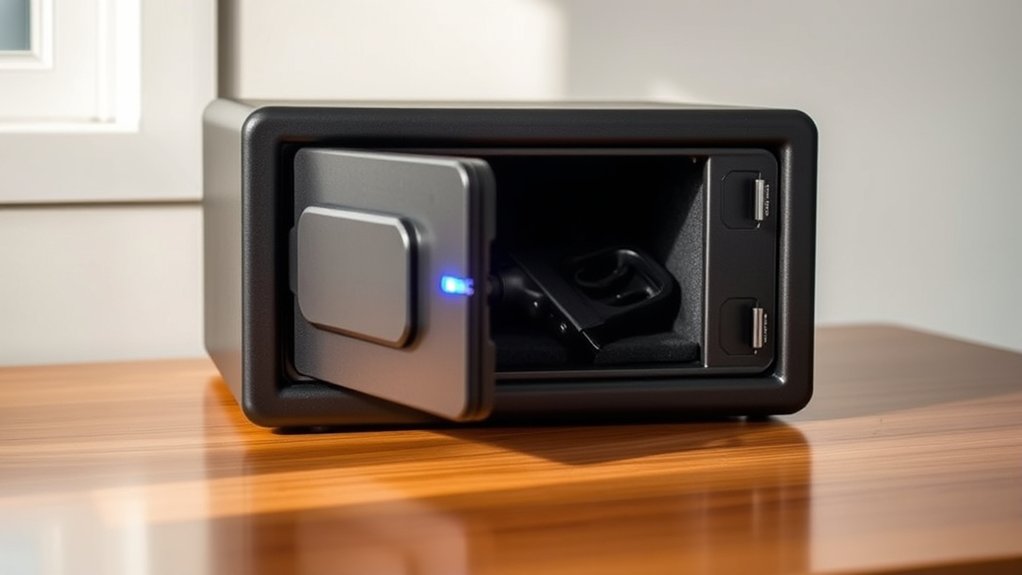
What Is A Biometric Gun Safe – Features And Benefits Explained
A biometric gun safe lets you access your firearm instantly using advanced fingerprint recognition, making sure only authorized users can get in. It combines reinforced steel construction with tamper alerts, lockout mechanisms, and multiple backups like PIN codes and emergency keys for reliable security.
The quick, silent operation and multiple fingerprint enrollment add extra convenience and protection. If you want to understand how setup, maintenance, and power management improve safe performance, this overview will guide you through the essentials.
Key Takeaways
- Biometric gun safes use fingerprint recognition for quick, secure access, supporting multiple authorized users with fast and reliable unlocking.
- They offer backup access through PIN codes and emergency keys to ensure entry during failures or power outages.
- Advanced security features include tamper alerts, lockout mechanisms, and reinforced steel construction to prevent unauthorized access.
- Power options include batteries with low-battery indicators and external USB ports to maintain continuous operation.
- Benefits include near-instant access, enhanced security by restricting entry to enrolled users, and convenient, silent firearm retrieval.
What Is a Biometric Gun Safe and How It Works
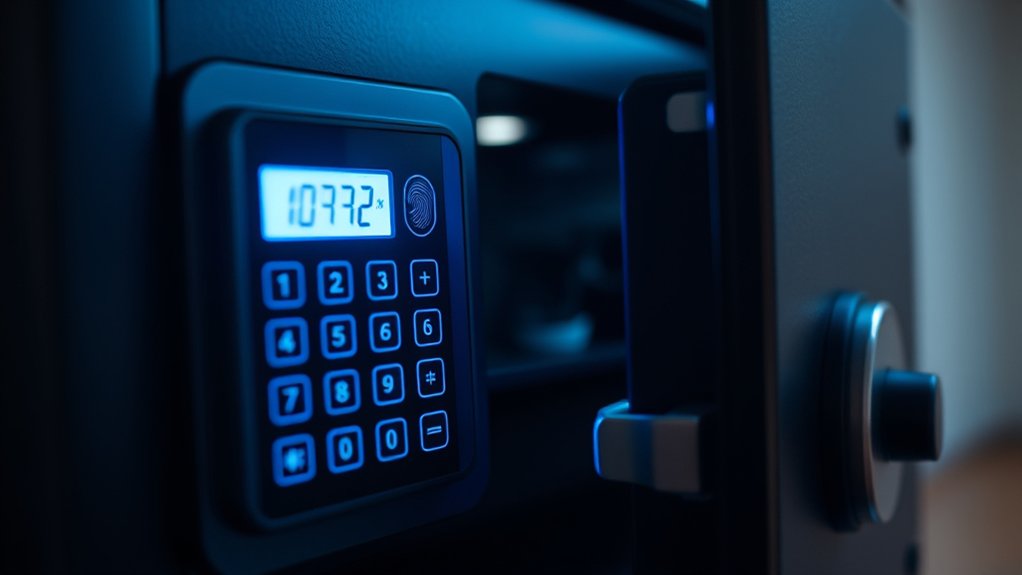
How does a biometric gun safe guarantee secure access? It uses advanced fingerprint recognition technology to make sure only authorized users can open it. When you place your finger on the scanner, the safe’s integrated chip quickly compares it to stored fingerprint data. Usually, it grants access within a second if there’s a match.
These safes support multiple fingerprints. This means different users can have access, or you can still open it if you have an injury without lowering security. The system is really precise, which helps prevent false positives and keeps access control strong.
Plus, many models come with backup options like a PIN code or an emergency key. This way, you can still get in if the fingerprint scanner fails or the power goes out. This layered approach ensures you have reliable security and uninterrupted access right when you need it most.
Essential Features in Top Biometric Gun Safes
While speed is critical during emergencies, top biometric gun safes also focus on durability and versatility to provide thorough protection. A reliable biometric lock with rapid fingerprint recognition, often under one second, ensures immediate access. Durable steel construction resists tampering and physical attacks.
Integrated security features like tamper alerts enhance defense against unauthorized entry. Plus, multiple access options increase flexibility. You can use PIN codes, emergency keys, or USB backup alongside biometric verification.
Key essential features include:
- High-capacity fingerprint storage for multiple users
- Robust tamper-alert systems for intrusion detection
- LED illumination and silent operation modes for discreet use
These elements work together to deliver a secure, efficient, and user-friendly firearm storage solution.
Fingerprint Recognition in Biometric Gun Safes
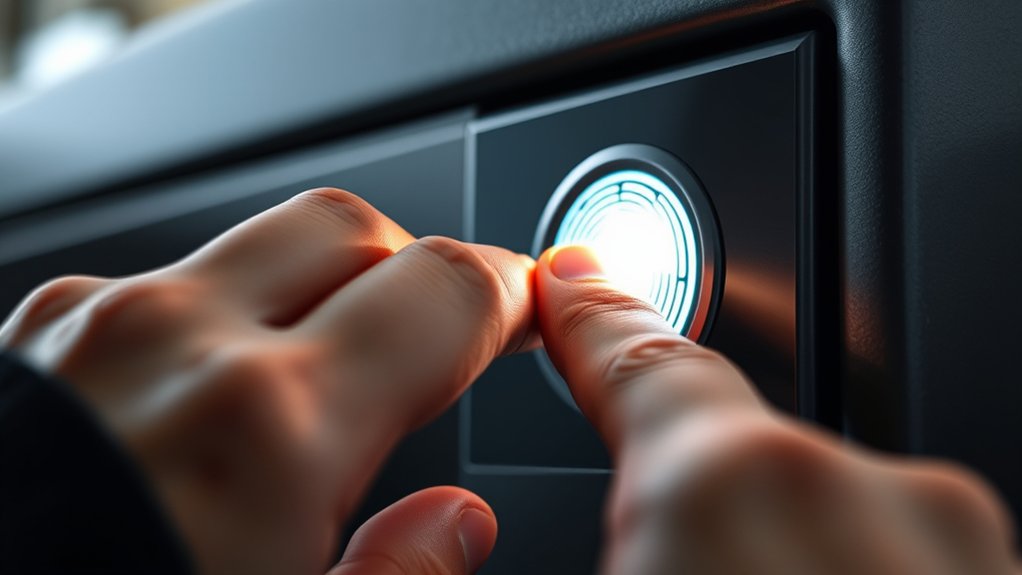
Among the various security features that define a top biometric gun safe, fingerprint recognition stands out as the primary method for swift and secure access. This biometric system uses advanced fingerprint scanners employing optical or capacitive technology to capture and verify your unique fingerprint pattern within seconds.
Biometric gun safes store multiple fingerprints, allowing several authorized users reliable access while maintaining stringent security. For peak performance, fingerprint scanners require clean, dry fingers, though many models feature algorithms to minimize false rejections.
Regular software updates and enrolling multiple fingerprints enhance the system’s accuracy and reduce recognition failures. Compared to traditional access options, fingerprint recognition in biometric gun safes offers a seamless, contactless, and highly secure method.
It ensures only authorized individuals gain immediate entry without compromising safety or convenience.
How to Set Up Your Biometric Gun Safe
Start by registering your fingerprints accurately. Make sure to scan your fingers from different angles to improve recognition reliability. It’s a good idea to take your time with this step.
Next, set up backup access methods such as key overrides or passcodes. This way, if the biometric system ever fails, you’ll still be able to get inside without any trouble.
Finally, keep an eye on the battery power. Regularly checking and replacing batteries will help prevent lockouts and keep your gun safe working smoothly.
Registering Fingerprints Correctly
Before registering your fingerprints, make sure your fingers are clean and dry. This helps improve the scanner’s accuracy.
Start the fingerprint registration by entering the biometric scanner’s enrollment process. Just follow the manufacturer’s instructions carefully. Hold your finger steadily on the scanner and let it capture multiple scans from different angles. This way, you get the best recognition accuracy.
It’s a good idea to register multiple fingerprints per user. This covers any changes due to injuries or finger positioning, so the scanner works smoothly every time.
Here are some key steps to successful fingerprint registration:
- Use multiple scans during enrollment to capture detailed fingerprint data.
- Hold your finger steady on the biometric scanner until each scan finishes.
- Check and update fingerprints regularly to keep recognition consistent.
Following these tips makes sure your fingerprint system works reliably and accurately.
Setting Up Backup Access
Two essential backup access methods, emergency keys and PIN codes, ensure you can open your biometric gun safe if the fingerprint scanner fails. During your safe’s setup, follow the manufacturer’s programming instructions to register emergency keys and program PIN codes. Store emergency keys securely but accessibly outside the safe.
It’s a good idea to regularly test both methods to confirm reliable backup access. That way, you won’t be caught off guard if your primary biometric system isn’t working.
| Backup Method | Setup Step | Best Practice |
|---|---|---|
| Emergency Keys | Register physical keys | Store keys in an accessible secure location |
| PIN Codes | Program during initial setup | Use strong, memorable codes |
| Testing | Test backup access regularly | Verify function periodically |
This structured approach guarantees you’re ready for emergencies. Backup access complements your biometric security perfectly.
Maintaining Battery Power
Although biometric gun safes offer advanced security features, their reliability depends heavily on consistent battery power. To keep things running smoothly, make sure you install the battery correctly, paying close attention to the manufacturer’s polarity markings. It’s also a good idea to keep an eye on the low battery indicator regularly to avoid any unexpected lockouts.
Use recommended battery types like alkaline or lithium-ion to get the best performance and longer lifespan. And always have a backup power source handy, such as a USB-C portable charger or an external power supply. This way, you can be sure you’ll have access during emergencies.
Here are some key maintenance steps to remember:
- Replace batteries promptly when low battery warnings appear.
- Double-check that the battery installation matches the polarity guidelines.
- Keep backup power sources within easy reach for emergencies.
Common Biometric Gun Safe Issues and How to Fix Them
Why might your biometric gun safe fail to recognize your fingerprint? Common issues include wet, dirty, or greasy fingers impairing the fingerprint scanner’s accuracy. Dirt or debris on the scanner surface also disrupts recognition, so regular maintenance is essential.
Frequent incorrect attempts can trigger temporary lockouts or tamper alerts, typically lasting 100 seconds or more, preventing further access. Sometimes, sensor malfunction or software glitches happen in biometric safes. These problems often resolve with a system reset or firmware update.
Battery depletion can also cause failures, but that’s covered elsewhere. To ensure reliable operation, clean the fingerprint scanner routinely and avoid scanning compromised fingerprints. Also, update the safe’s software as needed.
Addressing these factors keeps your biometric safe responsive and secure.
Security Benefits Beyond Fingerprint Access
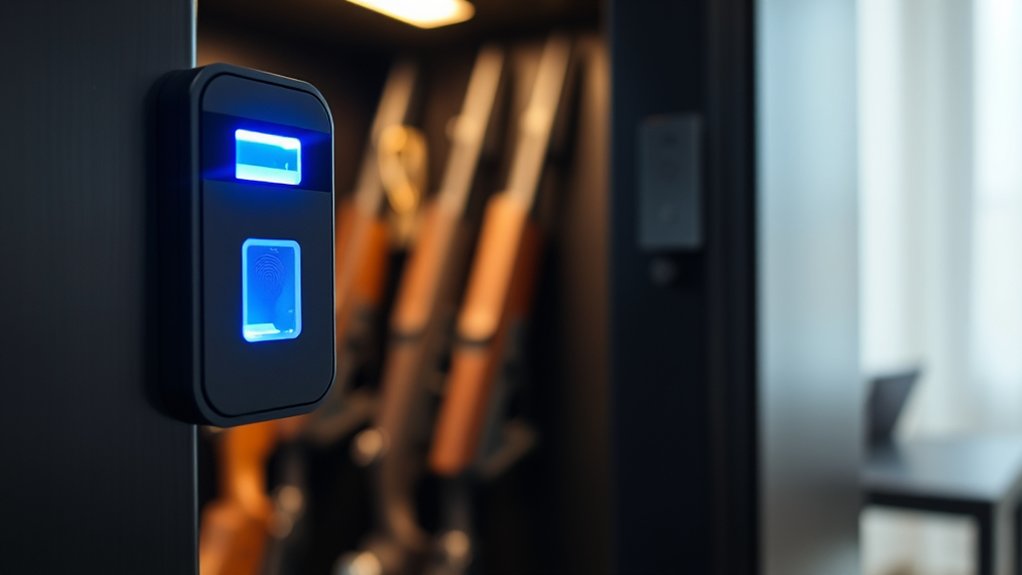
You’ll get tamper alerts that lock the safe after several failed fingerprint attempts, which helps keep forced entry at bay.
Plus, the reinforced steel construction makes sure the safe can stand up to physical attacks, keeping everything inside secure.
And don’t worry if the biometric system has a hiccup—there are multiple access options like PIN codes and emergency keys to make sure you can always get in when you need to.
Tamper Alerts And Locks
When someone tries to tamper with your biometric gun safe, advanced tamper alerts immediately activate loud alarms or send notifications to deter unauthorized access. These security features go beyond fingerprint recognition, incorporating automatic lockout mechanisms after multiple unauthorized attempts.
The safe enforces a lockout period, commonly around 100 seconds, disabling access to prevent brute force entry. Reinforced steel locks and anti-pry designs further secure the safe against physical intrusion.
Plus, tamper-evident seals or sensors notify you if the safe has been moved or disturbed.
Key tamper alerts and lock features include automatic lockout after repeated failed fingerprint or PIN attempts, loud alarms and remote notifications triggered by tampering, and reinforced locks with anti-pry construction for enhanced physical security.
These integrated systems work together to ensure robust protection against unauthorized attempts.
Multiple Access Options
While tamper alerts and reinforced locks protect against unauthorized entry attempts, relying solely on fingerprint recognition can sometimes limit access during unexpected situations. That’s why biometric gun safes incorporate multiple access options to guarantee reliable access.
Backup methods such as PIN codes and emergency keys ensure you can open the safe if biometric sensors fail due to dirt, moisture, or injury.
A PIN code provides quick, silent entry and can be securely reset or shared. Meanwhile, an emergency key serves as a physical fail-safe during power outages or system malfunctions.
These multiple access methods enhance security by preventing lockouts and maintaining versatile entry pathways for authorized users.
Reinforced Steel Construction
Although biometric locks provide advanced digital security, reinforced steel construction delivers critical physical protection that you can’t overlook. Reinforced steel substantially enhances your safe’s security by resisting drilling, cutting, and brute-force attacks. This ensures durability against tampering.
Even if someone bypasses the biometric system, thick steel walls maintain physical protection. They prevent unauthorized access and keep your valuables safe.
Key benefits include:
- Anti-pry design features that deter forced entry attempts
- Robust durability that preserves structural integrity under attack
- Superior security combining biometric access with reinforced steel to safeguard your valuables
Power Options and Battery Backup for Biometric Gun Safes
Since reliable power is critical for biometric gun safes, these devices primarily use high-quality alkaline or lithium-ion batteries to guarantee long-lasting operation. You’ll find many models equipped with a low-battery indicator to alert you before power runs out, preventing lockouts.
Diverse power options often include an external power port, commonly USB-C or USB, allowing connection to an external power bank for emergency power supply.
Furthermore, battery backup systems like secondary battery compartments or emergency keys provide fail-safe access during total power depletion.
To maintain optimal function, you must regularly check and replace batteries, ensuring uninterrupted biometric recognition and immediate access. Proper management of these power features is essential for securing your firearms without compromising quick retrieval.
Why Choose a Biometric Gun Safe Over Traditional Models
When seconds count, biometric gun safes give you near-instant access through advanced fingerprint recognition technology. They outperform traditional models that rely on keys or combinations. Biometric safes eliminate delays caused by forgotten combinations or misplaced keys, ensuring quick access when it matters most.
Their high-resolution fingerprint scanners store multiple prints, so you can still get in even with minor finger injuries. Compared to traditional safes, biometric models offer superior security by restricting access solely to enrolled users. This prevents unauthorized entry efficiently.
Key advantages include:
- Rapid access within seconds via fingerprint scanner
- Enhanced security by limiting access exclusively to authorized users
- No need to remember combinations or carry physical keys
Choosing biometric safes guarantees you faster, more secure firearm retrieval than traditional safes can provide. It’s a smart choice for peace of mind and quick response.
Frequently Asked Questions
Can Biometric Gun Safes Store Fingerprints of Children or Minors?
Yes, biometric gun safes can store fingerprints of children or minors if the device supports multiple fingerprint registrations. However, you should know that children’s fingerprints are smaller and less defined, which may reduce recognition accuracy.
Manufacturers usually advise limiting fingerprint storage to authorized adults to maintain security and reliable performance.
Storing minors’ prints can cause inconsistencies due to fingerprint changes over time. This might compromise safe access and functionality.
How Often Should the Fingerprint Scanner Be Cleaned for Optimal Performance?
You should clean the fingerprint scanner at least once a week to maintain peak performance. If you use the safe frequently or in dusty environments, clean it more often.
Use a soft, lint-free cloth to remove dirt, oils, and moisture that can interfere with recognition accuracy.
Avoid harsh chemicals or abrasive materials, as they can damage the sensor surface.
Consistent cleaning reduces false rejections and guarantees reliable fingerprint recognition every time. It’s a simple step that really makes a difference.
Just a little care goes a long way!
Are Biometric Gun Safes Waterproof or Resistant to Extreme Weather Conditions?
You shouldn’t expect biometric gun safes to be waterproof castles. They resist dust and minor splashes but won’t survive a downpour or full immersion.
Extreme weather like heavy rain, snow, or high humidity can corrode sensitive electronics unless the safe has specialized seals or coatings.
For reliable protection, you need to keep your safe sheltered or use extra weatherproof coverings.
Most biometric models aren’t built to brave harsh outdoor conditions, so it’s best to keep them indoors or in a protected spot.
Can Biometric Gun Safes Integrate With Home Security Systems?
You generally can’t directly integrate biometric gun safes with home security systems, as most operate independently without built-in compatibility.
However, some advanced models offer Bluetooth or Wi-Fi connectivity, letting you connect via third-party apps or smart home hubs.
To monitor access or safe status within your security setup, you’ll need additional smart sensors or automation devices.
Manufacturers rarely design these safes for seamless integration with broader home security platforms.
What Is the Average Lifespan of a Biometric Gun Safe’s Electronic Components?
Wondering how long your biometric gun safe’s electronics will last? Typically, you can expect 3 to 5 years with regular use and proper maintenance.
High-quality models often feature replaceable batteries and robust circuits, sometimes extending beyond 5 years.
Keep in mind, factors like battery quality, environmental exposure, and usage frequency affect longevity.
To guarantee reliability, you should periodically test and replace batteries and electronic modules as recommended by manufacturers.
It’s all about staying on top of maintenance to keep things running smoothly.
Conclusion
So, if you’re still fumbling with keys or memorizing long codes like it’s the ’90s, a biometric gun safe might just save your day and your fingers. With fingerprint tech, you get lightning-fast access without sacrificing security.
Sure, it’s not magic, but it’s the closest thing in gun safes. Embrace the future: secure, smart, and seriously efficient. Because your guns deserve more than just a rusty lock and a prayer.