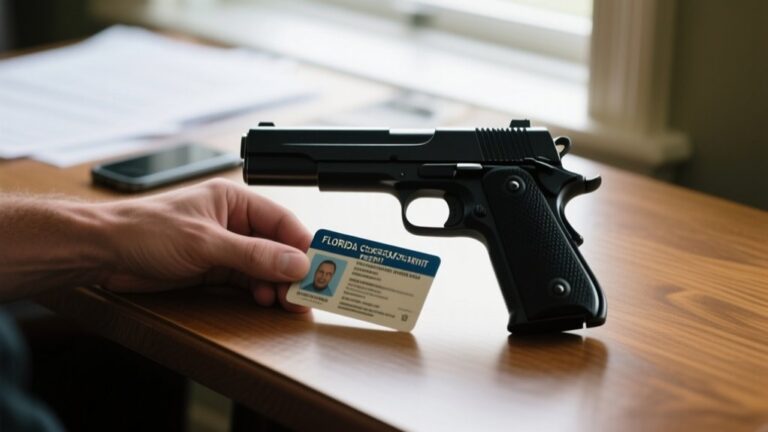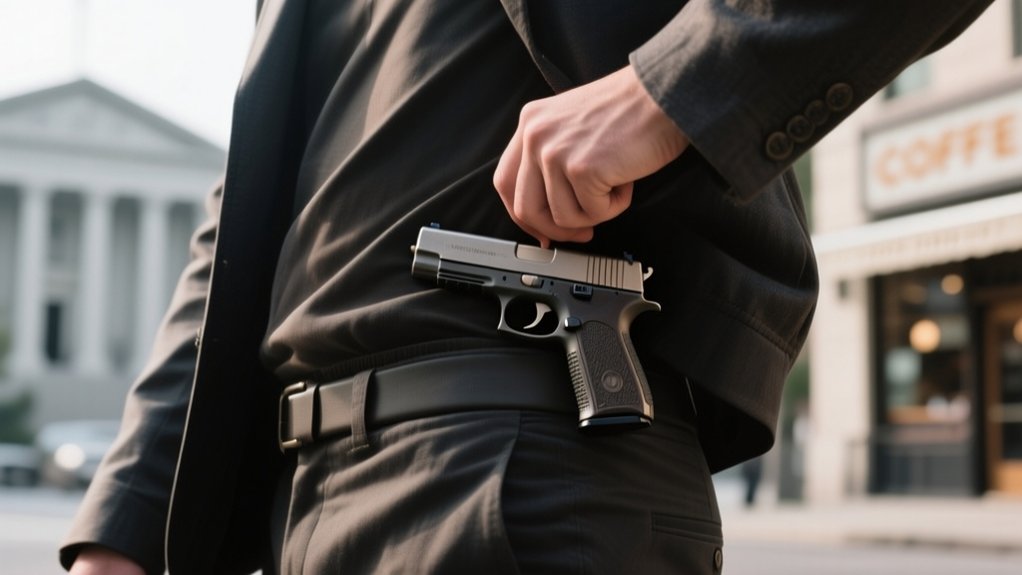
Where Can You Carry A Concealed Weapon – Legal Places And Restrictions
You can carry a concealed weapon in many public places like parks, streets, and restaurants where you’re not consuming alcohol. It’s also allowed on private property unless the owner says otherwise.
However, carrying is prohibited in schools, hospitals, courthouses, government buildings, and venues with large crowds. Always respect private property rules and be aware of local laws to avoid penalties.
Understanding these basics helps you carry responsibly and legally. Take some time to explore further for detailed guidance and compliance tips.
Where You Can Carry a Concealed Weapon in Virginia
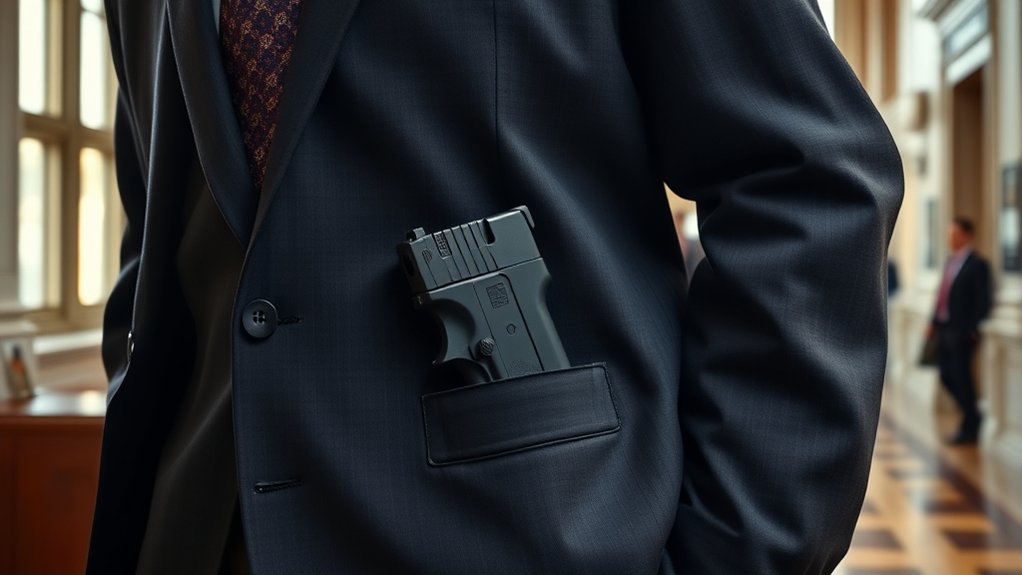
In Virginia, you can carry a concealed weapon in a variety of locations, but certain restrictions apply. You’re allowed concealed carry on private property unless the owner prohibits firearms or local laws impose restrictions. This means you can carry in your own residence, business, or private vehicle without extra limitations.
Concealed carry is permitted on private property in Virginia unless specifically restricted by the owner or local law.
In public areas like parks, streets, and recreational spaces, concealed carry is generally permitted unless local authorities specify otherwise.
Restaurants and clubs that serve alcohol also allow concealed carry, provided you don’t consume alcohol while armed.
While these rules offer flexibility, you must stay aware of local restrictions that may affect where you can legally carry. Understanding these boundaries ensures you exercise your rights responsibly and within Virginia’s legal framework.
Key Locations Where Concealed Weapons Are Prohibited
Although you can carry a concealed weapon in many areas across Virginia, several key locations strictly prohibit it to guarantee public safety. Under current concealed carry laws, you’re prohibited from carrying firearms in public hospitals, healthcare facilities, courthouses, and entertainment venues with large capacities.
Casinos, public transit, polling places, and legislative meetings also forbid concealed weapons. Furthermore, places of worship generally ban firearms unless officials explicitly permit them, especially during services. These gun laws ensure sensitive environments remain secure and orderly.
Familiarizing yourself with these restrictions is essential to avoid legal issues and uphold public safety. Always verify local regulations, as concealed carry laws continue to evolve. You must comply with all prohibitions on carrying concealed weapons in these designated key locations.
Special Restrictions in Schools and Child Care Facilities
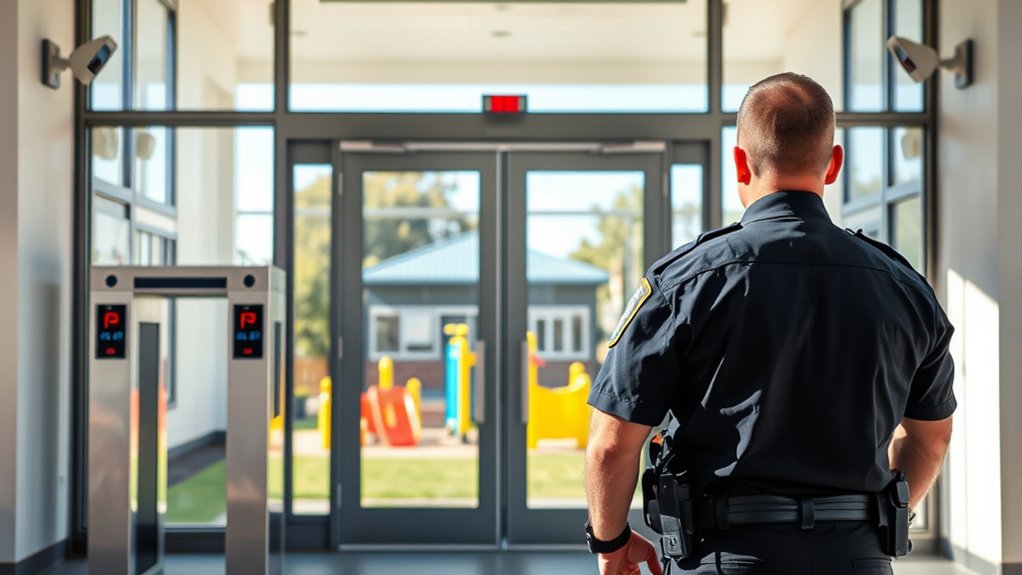
You generally can’t carry concealed weapons in most school buildings or on school grounds during operational hours. There are very few exceptions to this rule.
When it comes to child care facilities, firearms are strictly prohibited inside, but they’re allowed in parking areas.
Knowing these rules helps you stay out of trouble and keeps kids safe.
School Property Limitations
While you may carry a concealed weapon in many places, school properties enforce strict limitations to guarantee safety. On school property, concealed carry is heavily restricted to protect students and staff. Firearm restrictions prohibit carrying a concealed weapon in elementary and secondary school facilities, including classrooms and administrative buildings.
Exceptions are rare and typically limited to vehicle drop-off or pick-up by a parent or guardian. College dormitories and classrooms also restrict concealed carry unless you’re a registered student, faculty, or authorized employee. Carrying at school-sponsored events or in areas primarily used for children’s care is strictly forbidden.
These measures prioritize school safety by minimizing firearm presence on campus. Always verify local laws, but understand that carrying a concealed weapon on school property is generally prohibited to maintain a secure learning environment. So, it’s best to be informed and cautious about where you carry.
Child Care Facility Bans
Where can you never carry a concealed weapon? You can’t carry one in child care centers or facilities, whether public or private. Firearm restrictions here are strict to guarantee children’s safety.
Concealed carry bans extend to day care centers and agencies, where firearm prohibitions are firmly enforced. Educational facilities, including elementary and secondary schools, also prohibit firearms on their premises. This covers classrooms, administration buildings, and other areas primarily used for learning.
Exceptions are minimal and typically limited to parents or guardians in vehicles during drop-off or pick-up.
Colleges and university dormitories enforce concealed carry bans unless you’re a registered student, employee, or faculty member authorized with specific safety devices.
These firearm restrictions reflect a broad commitment to protecting vulnerable populations within educational and child care settings. It’s all about keeping these environments safe for everyone involved.
How State and Federal Concealed Carry Rules Differ
Because concealed carry laws involve both state and federal regulations, understanding their differences is essential for lawful firearm possession. Federal regulations allow law enforcement officers to carry concealed weapons despite state restrictions, while most civilians must comply with state-imposed permit requirements.
Some states permit permitless carry, but this variation impacts permit recognition across jurisdictions.
State restrictions often define prohibited locations such as schools and courthouses, whereas federal regulations apply uniformly to federal buildings.
Reciprocity agreements vary widely, as federal law doesn’t mandate nationwide recognition of concealed carry permits.
To guarantee legal carry, you must navigate both sets of rules carefully.
Keep in mind, state and federal concealed carry laws can differ quite a bit when it comes to where and how you may carry a concealed weapon. Staying informed helps protect you from unintentional violations.
Virginia Concealed Carry License and General Rules
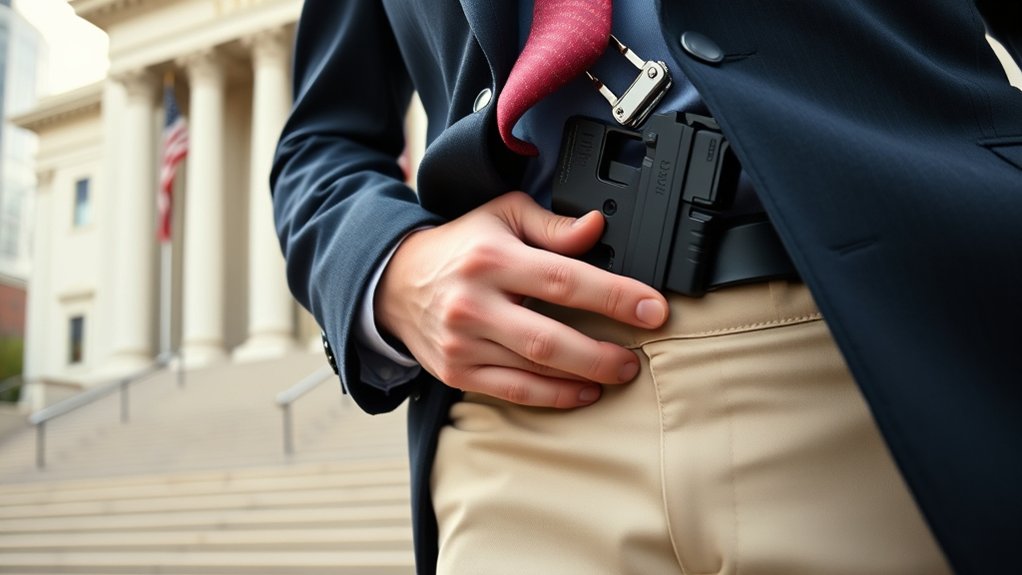
If you plan to carry a concealed weapon in Virginia, you’ll need a valid concealed handgun permit, which comes with specific legal restrictions. Your Virginia concealed carry license allows you to carry in most public places, but firearm restrictions apply near polling locations and certain government buildings during official hours.
While carrying concealed, you may enter restaurants and clubs serving alcohol, but you must avoid consuming alcohol.
Local governments can regulate firearms in parks, streets, and public buildings if they provide proper notice.
Keep in mind, private property owners in Virginia can prohibit firearms on their premises through posted notices or policies. Understanding these rules guarantees you carry responsibly and legally under your Virginia concealed carry license.
Private Property Rules for Concealed Carry
Understanding the rules for carrying concealed weapons on private property is just as important as knowing public regulations. As a concealed carrier, you must respect private property firearm restrictions set by the property owner. These restrictions often come through clear signage or written policies.
Ignoring these can lead to legal consequences, even if you hold a valid permit. So, always pay close attention to any signs or rules before you carry your weapon onto private property.
| Scenario | Action Required |
|---|---|
| Signage prohibits firearms | Do not carry concealed weapons |
| Permission granted by owner | Concealed carry allowed |
| No clear signage or policy | Confirm property owner’s rules |
Always verify restrictions before entering private property. Respecting private property signage and policies safeguards your rights and helps you avoid penalties. It’s really just about being responsible and aware.
Penalties for Violating Concealed Carry Laws in Virginia
Virginia enforces strict penalties for violating concealed carry laws to guarantee public safety and compliance. If you break these legal restrictions, expect escalating consequences that reflect the severity of your actions.
For a first offense, it’s considered a civil violation. You could face up to a $500 fine and have your permit suspended for six months.
The second offense is more serious—a 90-day misdemeanor. That comes with a fine of up to $1,000 and your permit will be revoked.
If you get caught a third time or more, it’s a felony charge. You could be looking at up to 4 years in prison, a $5,000 fine, and your permit will be revoked.
Carrying in prohibited locations like schools, courthouses, or polling places results in weapon seizure and additional penalties.
Penalties increase with repeated violations, so it’s really important to follow Virginia’s concealed carry laws carefully.
Tips for Staying Compliant With Concealed Carry Laws
While carrying a concealed weapon can be your legal right, you need to stay vigilant about the specific restrictions that apply in your area. To remain compliant with concealed carry laws, always verify local legal restrictions before you carry a concealed weapon.
Many prohibited locations, such as schools, courthouses, hospitals, and large entertainment venues, strictly forbid concealed weapons regardless of your license. Places of worship may allow it only if explicitly authorized.
Remember, parking areas are often exempt, but carrying inside the main premises remains illegal. Stay updated on recent law changes and local ordinances to avoid fines, license suspension, or felony charges.
Following these compliance tips guarantees you respect prohibited locations and uphold your rights responsibly under the law. It’s all about being informed and careful so you can carry safely and legally.
Frequently Asked Questions
Can I Carry a Concealed Weapon While Riding Public Transportation?
You generally can’t carry a concealed weapon on public transportation unless local laws and the transit provider’s policies explicitly allow it. Many transit systems ban firearms to guarantee safety.
Even if you have a permit, you must check specific state and transit rules before carrying.
Ignoring these rules could lead to fines or criminal charges, so always verify regulations before bringing a concealed weapon on buses, trains, or transit stations.
It’s better to be safe and sure than sorry when it comes to carrying weapons in public spaces.
Are There Restrictions on Concealed Carry During Protests or Public Demonstrations?
When tensions rise and voices fill the streets, you should know that many places restrict concealed carry during protests or demonstrations. Local laws often ban firearms in protest zones or during large gatherings to keep the peace.
Authorities might impose temporary bans to prevent chaos. Ignoring these rules could lead to fines, license suspension, or even criminal charges.
Can Concealed Weapons Be Carried Inside Federally Owned National Parks?
Yes, you can carry a concealed weapon inside federally owned national parks if state law allows it and you follow park regulations.
However, some parks impose their own restrictions or bans, so you must check specific rules before your visit.
Also, make sure your concealed carry permit is valid and recognized in that state.
Be aware certain areas within parks, like visitor centers or historic sites, might prohibit firearms regardless of broader permissions.
Always double-check those details to stay on the safe side.
How Does Concealed Carry Affect Self-Defense Insurance or Legal Protection?
You mightn’t realize it, but carrying a concealed weapon can directly impact your self-defense insurance. Insurers often exclude coverage if you break firearm laws or carry where it’s prohibited.
If you don’t follow local regulations precisely, your claim could be denied, leaving you unprotected legally and financially.
Staying compliant isn’t just about avoiding fines.
It’s about making sure your insurance and legal defenses stand strong when you need them most.
Are There Special Rules for Carrying Concealed Weapons While Traveling Out-Of-State?
Yes, you do have to follow special rules when carrying concealed weapons out-of-state. Each state has its own laws and reciprocity agreements, so your permit mightn’t be valid everywhere.
You’ll need to research the specific state’s requirements before traveling.
Failing to comply can lead to serious legal trouble, including fines or arrest. Always check local regulations and carry responsibly to stay within the law.
It’s better to be safe than sorry when it comes to this.
Conclusion
Understanding where you can legally carry a concealed weapon in Virginia is essential to staying compliant and safe. Did you know that over 70% of concealed carry permit holders follow the law without incident?
By knowing key restrictions, especially in schools, private property, and federal locations, you protect yourself and others. Always carry your license, respect private property rules, and stay updated on legal changes.
Staying informed guarantees you exercise your rights responsibly and avoid severe penalties. It’s all about being aware and careful.