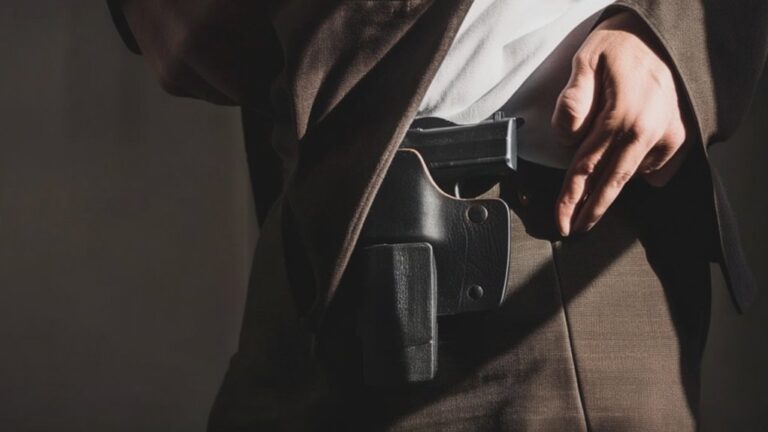
Is Florida A Concealed Carry State – Laws And Permit Rules
Yes, Florida lets you carry a concealed firearm without a permit if you’re 21 or older, a veteran, and legally allowed to own guns. However, a license is still necessary for travel to states recognizing Florida permits, same-day gun purchases, and access to restricted places. You must follow location restrictions, carry proper ID, and comply with background checks and training if applying for a license.
Understanding these rules helps guarantee you stay legal and safe statewide. Further details clarify eligibility, reciprocity, and responsibilities.
Key Takeaways
- Florida allows permitless concealed carry for qualified individuals aged 21 or older, effective July 1, 2023, with eligibility and legal restrictions.
- A concealed carry license is still required for travel, same-day firearm purchases, and access to certain restricted locations.
- Obtaining a Florida concealed carry license requires firearm training, a background check, proof of residency or citizenship, and a $119 fee.
- Florida recognizes out-of-state permits from 36 states for residents, but non-residents may need a Florida license to carry legally.
- Firearms are prohibited in specific areas like schools, courthouses, airports, and police stations, even with a permit or permitless carry.
What Is Florida’s Permitless Concealed Carry Law?
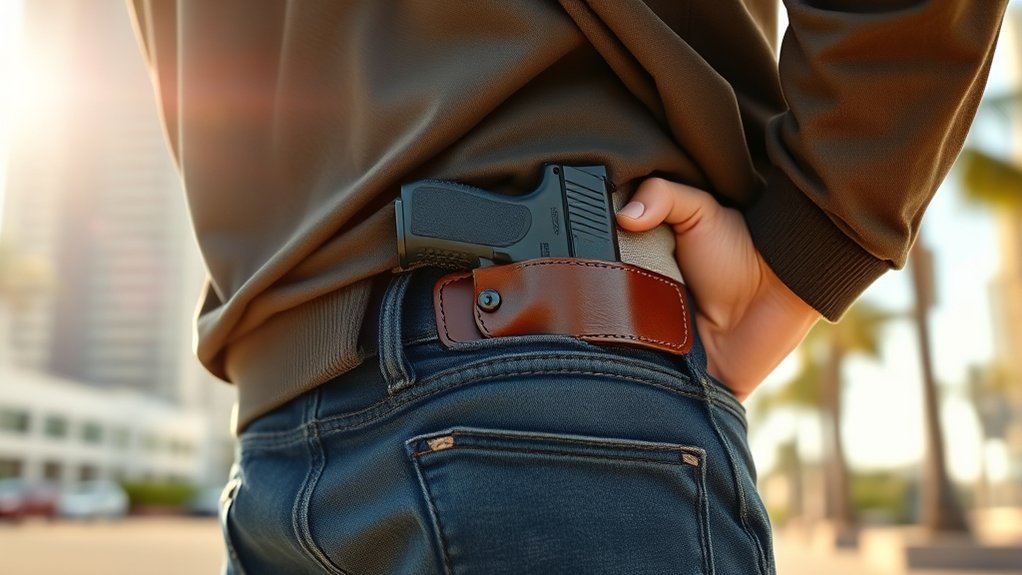
Although Florida has long required permits for concealed carry, its permitless concealed carry law, effective July 1, 2023, now allows qualified individuals to carry concealed firearms without obtaining a permit.
To comply, you must be 21 or older (or a military veteran) and legally eligible to own firearms.
This law removes prior requirements like background checks and safety training for carrying concealed weapons. However, responsible firearm storage remains critical to prevent unauthorized access.
Practicing proper concealed carry etiquette, such as maintaining situational awareness and respecting designated no-carry zones, ensures public safety and legal compliance.
While you can carry without a license, understanding these responsibilities is essential to exercise your rights safely and respectfully under Florida’s updated permitless concealed carry provisions.
When Do You Still Need a Florida Concealed Carry License?
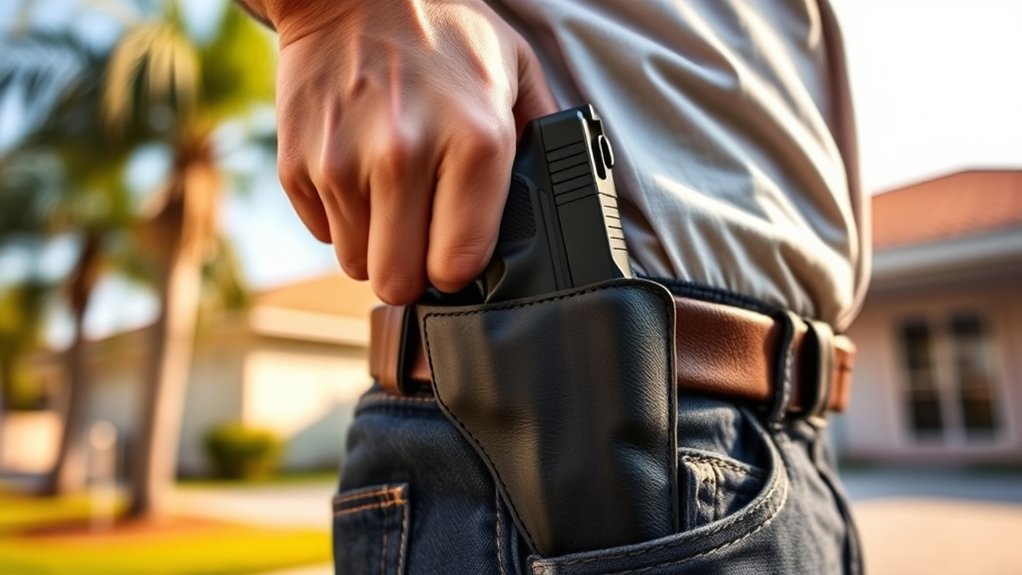
You still need a Florida concealed carry license if you plan to travel to states that honor Florida permits or want to purchase a firearm the same day.
Plus, the license gives you access to certain restricted places where permitless carry isn’t allowed.
Knowing these rules helps make sure you stay compliant and prepared for different situations.
Reciprocity And Travel
When traveling to Florida, understanding the state’s reciprocity agreements is essential for knowing when you still need a Florida concealed carry license. Florida recognizes permits from 36 states for residents, allowing you to carry without additional licensing.
However, non-residents generally must have a Florida license or rely on Florida’s permitless carry law if their home state lacks reciprocity.
Dispelling concealed carry myths, it’s clear that firearm safety requires compliance with these rules to avoid legal issues.
| Permit Status | Residency | Carry Rights in Florida |
|---|---|---|
| Florida License | Resident | Legal carry |
| Out-of-State Permit | Resident | Recognized from 36 states |
| Out-of-State Permit | Non-Resident | Not recognized, Florida license needed |
| No Permit | Visitor | Permitless carry allowed if no reciprocity |
| Florida License | Non-Resident | Recognized in reciprocal states |
Same-Day Firearm Purchases
While Florida allows you to purchase a firearm and take it home immediately after a background check, carrying that firearm concealed in public requires a Florida concealed carry license.
Even if you buy a gun on the same day, you still need this license to legally carry it concealed outside your property. The background check process usually takes about three business days, but possession doesn’t give you public carry rights.
You’ve got to follow gun safety and storage rules at home to prevent unauthorized access. Getting a concealed carry license means you meet the legal standards for carrying firearms in public.
Plus, it gives you reciprocity benefits with other states.
Without this license, carrying concealed is illegal, no matter the same-day purchase rules. So, even if you buy a gun quickly, don’t forget the license if you want to carry it around.
Access To Certain Locations
Although Florida has embraced permitless carry in many areas, you still need a concealed carry license to legally carry firearms in specific restricted locations. These include schools, courthouses, detention facilities, polling places, and federal buildings where firearms are explicitly prohibited.
You also need a license to carry concealed in alcohol-licensed establishments and airport sterile areas.
Without it, carrying in these locations is unlawful and risks legal consequences. Maintaining community awareness about these restrictions promotes responsible firearm safety and helps prevent accidental violations.
A concealed carry license not only ensures you comply with state laws but also offers legal protections and reciprocity benefits.
Understanding when a license remains mandatory is essential for lawful, safe firearm possession across Florida’s varied environments. So, even though rules have loosened in many places, knowing where you still need that license keeps you on the right side of the law.
It’s all about staying informed and carrying responsibly.
Who Is Eligible for Concealed Carry in Florida?

To be eligible for concealed carry in Florida, there are a few key requirements you need to know about. First off, you have to meet certain age limits or qualify under military exceptions.
On top of that, you need to be a U.S. citizen or a legal resident.
And it’s not just about who you are—you also have to show that you know how to handle a firearm safely by completing an approved training course.
So, before you apply for a concealed carry license, it’s really important to understand these eligibility standards.
That way, you’ll know exactly what’s expected and can be confident in your application.
Eligibility Criteria Overview
Because Florida requires applicants to meet specific standards, you must be at least 21 years old or an active military member or honorably discharged veteran to qualify for a concealed carry license.
You also need to pass a background check and demonstrate firearm proficiency through approved training or equivalent experience.
Federal and state laws prohibit individuals with felony convictions or certain misdemeanors from carrying firearms, making them ineligible.
Non-residents can apply if they meet these same criteria.
Additionally, you mustn’t be under any active risk protection orders or unresolved criminal issues.
Proper firearm storage is essential for responsible ownership, contributing to safer communities.
Understanding these criteria alongside concealed carry statistics helps you assess Florida’s regulatory environment accurately and responsibly.
Age And Military Exceptions
When considering eligibility for concealed carry in Florida, age and military status play crucial roles. The state enforces strict age restrictions, requiring applicants to be at least 21 years old to obtain a concealed carry license.
However, military exemptions allow active-duty members and honorably discharged veterans aged 18 or older to apply.
Significantly, active-duty military personnel can carry concealed firearms without a license.
Individuals aged 18 to 20 who aren’t military members can’t apply for a license, despite being permitted to possess firearms.
To qualify, you must meet all eligibility criteria, including these age restrictions and legal requirements.
Understanding these distinctions ensures you comply with Florida’s concealed carry laws and recognize when military exemptions apply.
It’s important to know exactly where you stand so you don’t run into trouble.
Training and Background Checks Required for Florida Concealed Carry
Florida requires applicants for a concealed carry license to complete specific firearm training or demonstrate equivalent proficiency. To meet this requirement, you must complete approved firearm safety and concealed carry training courses before applying. Acceptable training includes hunter safety programs, NRA firearms safety classes, or state-certified instruction.
Alternatively, military service or active participation in organized shooting competitions can serve as proof of competence. This guarantees you have the necessary skills to handle firearms responsibly.
While permitless carry doesn’t mandate training, obtaining a license demands verified proficiency.
Alongside training, a thorough background check is conducted to assess your eligibility, ensuring no disqualifying factors exist.
Together, these requirements maintain public safety by confirming that license holders possess both the knowledge and character to carry concealed weapons lawfully in Florida.
How to Apply for a Florida Concealed Carry License
Completing the required firearm training and passing a background check are just the initial steps in obtaining a concealed carry license. To apply, you must submit an application online, in person, or by mail, including proof of firearm proficiency and valid ID. The $119 fee covers fingerprint processing.
You’ll need to demonstrate gun safety competence through approved training or equivalent experience. Additionally, provide documentation verifying Florida residency or U.S. citizenship and meet eligibility criteria such as age or veteran status.
The Florida Department of Agriculture and Consumer Services processes applications, typically within 90 days.
Remember that responsible firearm storage and continued gun safety awareness are essential once licensed. Renewals require timely submission of forms and fees, with notifications sent at least 95 days before expiration. It’s a good idea to keep an eye out for those reminders so you don’t miss your renewal window.
How Florida Handles Reciprocity With Other States
Although concealed carry laws vary widely across the United States, Florida actively maintains reciprocity agreements with 36 states to facilitate permit recognition for its residents. These agreements guarantee that your Florida concealed carry license retains validity when you travel to participating states, subject to their specific statewide restrictions.
Florida holds reciprocity with 36 states, ensuring your concealed carry license is recognized beyond its borders.
However, recognition isn’t uniform. Some states fully honor Florida’s permits, while others impose limitations or don’t recognize them at all. Non-residents holding Florida permits face more restricted reciprocity, as many states limit acceptance to their own residents.
Florida updates its reciprocity list regularly, so you should consult official resources like the USCCA app or Florida law enforcement agencies to verify current agreements.
While Florida’s permitless carry law lets you carry without a license, having a Florida license enhances your reciprocity benefits across state lines.
Legal Responsibilities When Carrying a Concealed Weapon in Florida
When carrying a concealed weapon in Florida, you must carry valid identification at all times, whether you hold a concealed carry license or qualify for permitless carry. This helps law enforcement verify your license during any encounters and ensures you’re following state rules.
You also need to stick to gun safety protocols. That means secure storage and careful handling to avoid accidents or unauthorized access.
It’s important to know and follow all local, state, and federal firearm laws because breaking them can lead to serious penalties.
Law enforcement can access concealed carry registration data, but this info isn’t public, so it’s really up to you to carry your weapon legally.
Legal and Prohibited Locations for Concealed Carry in Florida
Where can you legally carry a concealed weapon in Florida, and where are you strictly prohibited? With a valid concealed carry permit, you can carry in parks, forests, and wildlife management areas unless signage forbids it.
However, concealed carry is strictly prohibited in nuisance locations, police stations, detention facilities, courthouses, polling places, and legislative meeting areas.
You also can’t carry firearms in airports’ sterile areas, alcohol-focused sections of bars, or hospitals providing mental health services.
Schools restrict carry as well unless you’re authorized staff or a student with permission.
Proper gun storage remains essential when you’re not carrying.
Additionally, firearms are banned in nuclear facilities and federal or state security-sensitive sites.
Understanding these location-based restrictions helps you stay on the right side of Florida’s concealed carry laws. So, keep these rules in mind whenever you’re out and about.
Renewing or Replacing Your Florida Concealed Carry License
Understanding where you can legally carry your concealed weapon in Florida is just one part of staying compliant with the law. Your Florida concealed carry license is valid for seven years. Timely license renewal is vital to maintain your legal rights.
Renewal notices arrive about 90 days before expiration, giving you plenty of time to submit the renewal form and fee, which includes a background check. If your license expires, you’ll need to apply all over again.
If you need to update your address, you must notify the authorities within 30 days. The good news is, no reapplication is required for an address update.
| Action | Timeline | Requirement |
|---|---|---|
| License Validity | 7 years | Renewal before expiration |
| Renewal Notice | At least 90 days prior | Renewal form, fee, background check |
| Expired License | Immediate reapplication | New application and background check |
| Address Update | Within 30 days | No reapplication required |
Frequently Asked Questions
Can Non-Residents Apply for a Florida Concealed Carry License?
Yes, you can submit a non-resident application for a Florida concealed carry license.
Keep in mind, concealed carry reciprocity depends on whether your home state recognizes Florida’s permit. So, check reciprocity agreements carefully before applying.
Are There Specific Firearm Storage Laws in Florida?
You might expect strict firearm storage laws, but Florida lacks specific mandates. While it requires background checks and firearm registration elsewhere, here, your responsibility is securing guns safely, especially around minors. This helps prevent accidents and theft.
How Does Florida Handle Concealed Carry Violations or Penalties?
Florida penalizes concealed carry violations with fines, jail time, and license revocation. You’ll face criminal charges if you bypass firearm registration or background checks, especially in restricted areas.
In those cases, law enforcement can confiscate firearms and enforce strict penalties. It’s important to follow all the rules to avoid serious trouble. Stay informed and carry responsibly.
Is Open Carry Legal in Florida?
Open carry isn’t legal in Florida except during fishing, hunting, camping, or at shooting ranges. You should prioritize firearm safety by understanding these rules to avoid penalties and guarantee responsible, lawful firearm handling.
It’s important to know where and when you can carry openly to stay on the right side of the law. Always make sure you’re following the specific guidelines for your activities. This way, you can enjoy your time outdoors without any legal trouble.
Are There Restrictions on the Types of Firearms for Concealed Carry?
Yes, you face carry restrictions based on firearm classifications. Florida allows concealed carry of handguns and stun guns but prohibits machine guns and certain ammunition types. This limits your options depending on the firearm’s classification and legal status.
Conclusion
You might think Florida’s permitless concealed carry law means you’re free to carry without restrictions, but that’s only part of the story. Knowing when you still need a license, understanding eligibility, training requirements, and legal responsibilities is essential.
Ignoring these details could lead to serious consequences. Before you carry concealed in Florida, make sure you fully grasp the rules. What you don’t know might just cost you more than you expect.