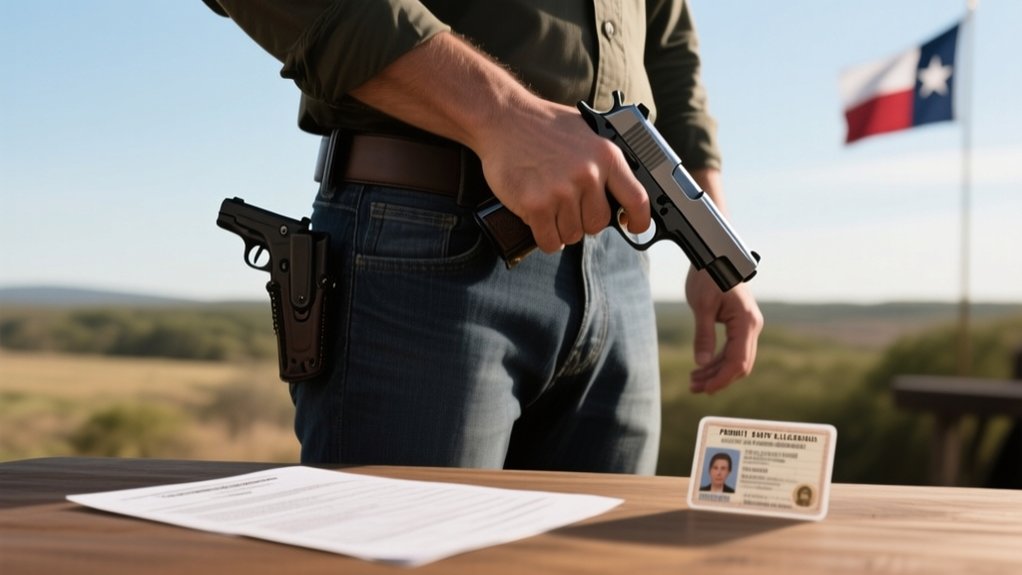
How To Get Concealed Carry In Texas – License Steps And Requirements
To get a concealed carry license in Texas, you must meet state eligibility, pass background checks, and complete 4-6 hours of DPS-approved training. This training includes a written exam and shooting proficiency.
You’ll need to submit your application online with the required documents, pay the fees, and schedule fingerprinting with an authorized provider. If you’re out-of-state, there are additional documentation and training steps to follow.
Once your application is approved, make sure to keep your address updated and renew your license on time to stay compliant. It’s a good idea to explore the process in detail so you don’t miss any requirements.
Key Takeaways
- Complete 4-6 hours of DPS-approved firearm safety and legal training, including passing a written exam and shooting proficiency test.
- Submit a completed LTC application online with valid ID, training certificate, and supporting documents, then pay the application fee electronically.
- Schedule and complete fingerprinting at an authorized provider following DPS guidelines to ensure application processing.
- Meet Texas eligibility requirements: no recent felonies, qualifying mental health status, and valid residency documentation.
- Renew or update your license and address online promptly to maintain compliance and avoid lapses in concealed carry privileges.
Check Texas LTC Eligibility and Reciprocity
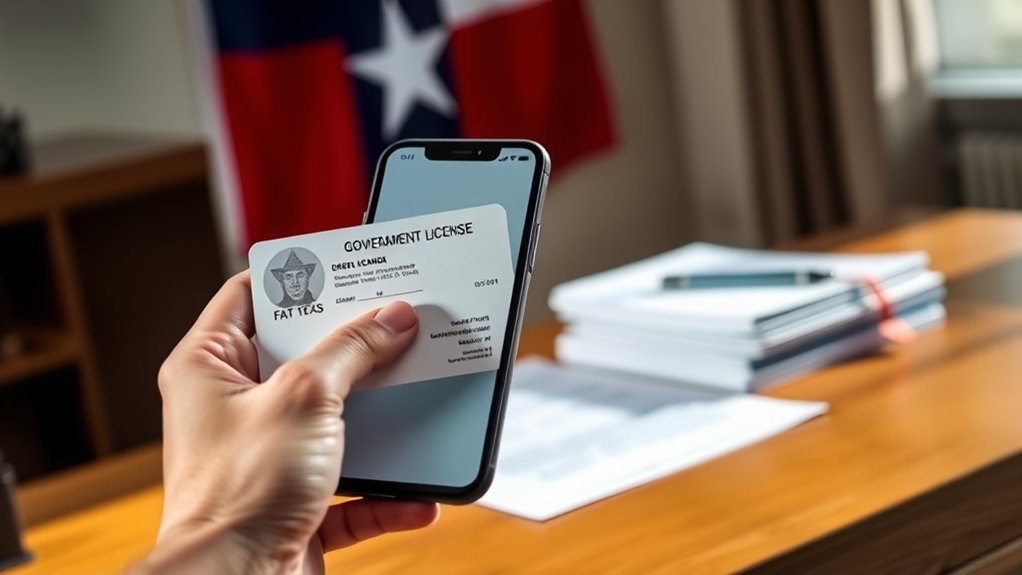
Before applying for a Texas License to Carry (LTC), you need to verify you meet the state’s specific eligibility requirements. These include passing background checks, having no recent felony convictions, and not being disqualified due to certain mental health conditions. These legal considerations are essential because Texas enforces strict state-specific restrictions that guarantee only qualified applicants receive an LTC.
If you’re an out-of-state resident, you must submit a valid driver’s license or ID and a recent proficiency certificate to qualify.
Texas recognizes concealed carry permits from states with reciprocity agreements, but these vary. So, you should confirm whether your out-of-state permit is valid in Texas before carrying.
Understanding these requirements helps you stay compliant and avoid legal issues when carrying concealed. It’s always better to double-check first rather than run into trouble later.
Understand Texas LTC Training and Exams

Once you confirm your eligibility for a Texas License to Carry, the next step involves completing the state-mandated training and exams. This includes 4-6 hours of classroom instruction focused on firearm safety, legal responsibilities, and safe storage.
You’ll need to pass a written exam and demonstrate shooting proficiency on a range. Both online and in-person classes are accepted if they meet Texas Department of Public Safety standards.
| Training Component | Details |
|---|---|
| Duration | 4-6 hours classroom instruction |
| Curriculum | Firearm safety, laws, use of deadly force |
| Exams | Written test and shooting proficiency |
| Format | Online or in-person, DPS-approved |
This process guarantees you understand Texas firearm laws and responsible carry practices. It’s designed to make sure you’re prepared and confident.
Gather Documents for Your LTC Application
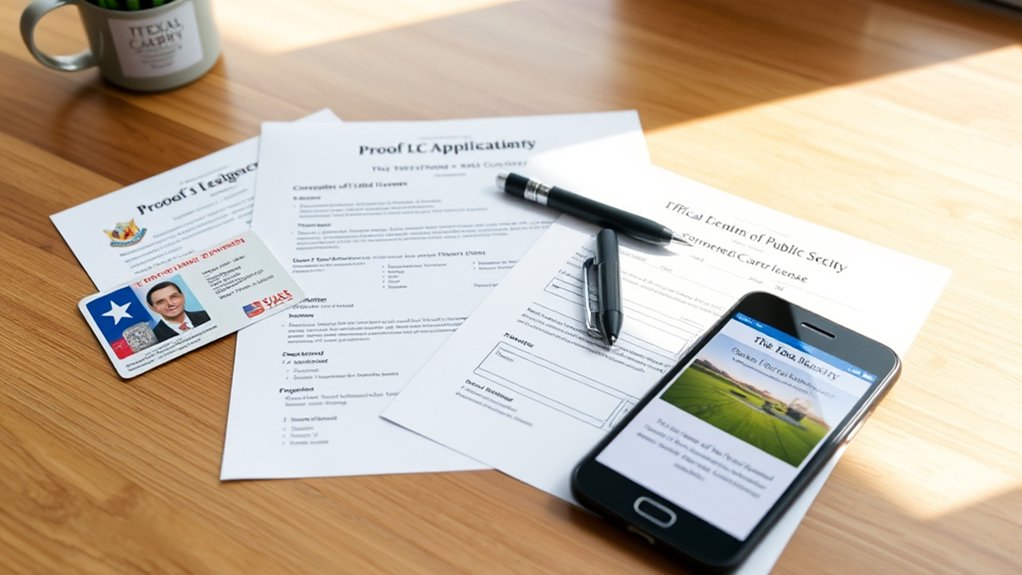
Before you submit your LTC application, be sure to gather all the required documents carefully. This means having your valid identification, Certificate of Training, and fingerprinting instructions ready.
It’s important to double-check that each document is current and filled out correctly. Doing this will help you avoid any unnecessary delays in the process.
Required Identification Documents
Although gathering the right identification documents may seem straightforward, you must guarantee each piece meets the Texas Department of Public Safety‘s specific requirements to avoid delays.
For ID verification and residency proof, Texas residents must submit a valid Texas driver license or ID card.
If you’re an out-of-state resident, provide a current out-of-state driver license or ID plus two passport-style photos. Make certain all documents are current, legible, and comply with DPS standards.
Keep in mind, you might be asked to submit additional identification or supporting documents during your application review.
Being thorough with your required identification documents helps streamline your LTC application and prevents unnecessary processing setbacks.
Always double-check each item before submission to meet Texas’s strict criteria.
Certificate Of Training
Along with your identification documents, you’ll need to provide a Certificate of Training to complete your LTC application. This certificate serves as training verification, proving you completed the handgun safety course approved by the Texas Department of Public Safety.
It must be signed by an instructor who meets specific instructor qualifications, confirming you underwent 4-6 hours of classroom and range instruction.
The certificate should clearly state the date of training completion. If you’re an out-of-state resident, you’ll also need to submit a proficiency certificate no older than two years.
Remember, submitting this certificate alongside your completed application form, proof of residency, and photos ensures your compliance with Texas licensing requirements.
Accurate documentation is essential to avoid delays in processing your LTC application. So, double-check everything before you submit to keep things moving smoothly.
Fingerprinting Instructions
To complete your LTC application, you’ll need to schedule an appointment with an authorized fingerprinting provider like L-1 Enrollment Services to have your fingerprints taken. The Department of Public Safety requires either fingerprint cards or electronic fingerprints to conduct thorough background checks.
Make sure to follow the fingerprinting procedures outlined by DPS carefully. This will help guarantee your submission meets security standards and avoids delays.
When you go for fingerprinting, bring a valid form of identification for proper verification.
Alongside fingerprints, gather supporting documents such as your Certificate of Training to include with your application.
Proper identification verification and accurately collected fingerprints are essential to completing the process smoothly.
Take some time to review all DPS instructions before your appointment. Doing this will help you comply fully with the requirements and prevent your application from being rejected.
Complete Your Texas LTC Application Online
You can complete your Texas LTC application entirely online through the official Department of Public Safety website. Just be ready to upload all the required documents, like proof of training and your ID.
You’ll also need to pay the necessary fees as part of the process.
Once you’ve submitted everything, you’ll go ahead and schedule your fingerprinting appointment to keep your application moving forward. It’s pretty straightforward!
Online Application Process
How can you streamline the process of obtaining your Texas License to Carry (LTC)? Start by completing your application online through the Texas Department of Public Safety website. You’ll submit your personal information, upload supporting documents like proof of training, and pay fees electronically.
Make sure all details are accurate to avoid delays. After submitting, schedule your fingerprinting at an authorized L-1 Enrollment Services location.
Remember, while holding your LTC, you must adhere to travel restrictions and safe firearm storage laws to remain compliant. The online system simplifies the process, allowing you to manage everything digitally except for fingerprinting.
This method saves time and helps you stay organized during your LTC application journey. It’s really the easiest way to keep things moving smoothly.
Required Supporting Documents
Although submitting your Texas License to Carry application online simplifies the process, gathering and uploading the required supporting documents carefully is essential for approval. You must provide a Certificate of Training from a certified instructor to prove handgun safety and proficiency.
Be sure to include a valid government-issued photo ID and proof of residency.
If you’re an out-of-state resident, submit your out-of-state driver’s license or ID along with two passport-style photos. All supporting documents must be uploaded electronically through the Texas Department of Public Safety’s online portal.
Make sure every document is current, legible, and meets the DPS’s specific standards to avoid delays.
Proper submission of these supporting documents is critical for smooth application verification and timely processing of your Texas LTC. Taking the time to double-check everything can really save you headaches later.
Schedule Fingerprinting With Identogo
When should you schedule your fingerprinting appointment with Identogo? It’s best to do this early in the application process to avoid delays in background checks and digital security verification.
To schedule, visit Identogo’s online appointment portal, create an account or log in, then select a convenient location and time. Bring a valid ID, like your driver’s license or state ID, to your appointment.
The fingerprinting fee is paid directly to Identogo at the time of your visit and is separate from any licensing costs.
Completing this step promptly ensures your background checks proceed smoothly, helping you stay on track for your Texas concealed carry license.
Submit Your Training Certificate to DPS
Once you’ve completed your fingerprinting with Identogo, the next step is to submit your Certificate of Training, known as the LTC-104 form, to the Texas Department of Public Safety (DPS). This training certification proves you’ve met all classroom and shooting proficiency requirements.
Make sure your LTC-104 is fully completed and signed by a certified instructor before submission. You can submit it online via the DPS website or include it in your mailed application packet.
Following these submission guidelines carefully is essential. If you don’t submit the certificate, it can delay or even invalidate your license approval.
| Step | Details |
|---|---|
| Form Name | LTC-104 Certificate of Training |
| Submission Methods | Online or Mail |
| Required Signature | Certified Instructor |
| Purpose | Verify Training Completion |
| Consequence of Omission | Delay or License Denial |
Know the Fees and Processing Times for LTC
Understanding the fees and processing times for your Texas License to Carry (LTC) is essential to avoid any unexpected delays or costs.
The standard fee for both new applications and renewals is $40. This fee is non-refundable and non-transferrable regardless of the outcome.
However, fee exemptions apply to honorably discharged military veterans, who pay a discounted $25.
Processing times typically take about 60 days, so plan accordingly. Keep in mind that processing delays can happen, especially during peak periods, which might extend this timeframe.
You can renew your LTC up to 12 months after it expires or as early as six months before it does.
Staying aware of these details helps you avoid lapses in your license and unnecessary fees. That way, you keep your concealed carry rights intact without interruption.
Renew Your Texas LTC and Update Your Address
Although you can renew your Texas License to Carry (LTC) up to 12 months after it expires, submitting your renewal application as early as six months before expiration helps prevent any lapse in your carry privileges.
Renew your Texas LTC up to 12 months after expiry, but apply six months early to avoid lapses.
For license renewal, you must submit a current application, pay the required fee, and confirm your eligibility.
If you’ve moved, remember that updating your address on your Texas driver license or ID doesn’t automatically update your LTC. You need to complete a separate online request through the Texas Department of Public Safety’s website for address verification and to update your LTC address.
Promptly updating your address guarantees your license remains valid and helps you avoid potential legal issues.
What Out-Of-State LTC Holders Need to Know
Keeping your Texas LTC up to date is important. But if you hold a license from another state, there are some extra steps you’ll need to follow to carry legally in Texas.
Out of state licensing requires you to submit a completed LTC-6 form, two passport-style photos, and a copy of your out-of-state ID.
You must complete Texas-specific training and meet eligibility criteria to obtain or keep your license here.
While some reciprocity agreements allow you to carry with your current license, it’s essential to verify your LTC legal limitations before carrying in Texas.
If you establish residency or move within Texas, make sure to update your address with the Texas DPS promptly.
You can also apply for renewal or replacement through the same process to stay compliant with Texas laws.
Frequently Asked Questions
Can I Carry a Concealed Weapon While Intoxicated in Texas?
You can’t carry a concealed weapon while intoxicated in Texas. Alcohol laws and intoxication restrictions strictly prohibit it. Violating this can lead to criminal charges, fines, or jail time.
It’s all about keeping everyone safe. So, if you’re drinking, it’s best to leave the gun at home or locked up. No exceptions when it comes to public safety concerns.
Are There Restrictions on Carrying Concealed Weapons in Schools?
School zones are like no-go zones for concealed carry. You can’t carry in K-12 schools or restricted areas without specific authorization.
Texas strictly limits concealed weapons on campuses. If you violate these rules, you could face criminal charges or have your license suspended. So, it’s really important to know and follow the law.
How Does Texas Law Treat Accidental Firearm Discharge?
Texas law holds you accountable for firearm safety and accidental discharge prevention. If your firearm discharges accidentally, you may face investigation, criminal charges, or liability if negligence or unsafe handling contributed to the incident.
Can Non-Residents Apply for a Texas Concealed Carry License?
Yes, you can apply for a Texas concealed carry license as a non-resident if you meet the non-resident eligibility requirements.
You’ll need to fulfill specific licensing requirements, including submitting the proper documents. Also, completing Texas-approved training is necessary where applicable.
It’s pretty straightforward once you know what’s needed!
What Are the Penalties for Carrying Without a License in Texas?
Don’t play with fire: carrying a handgun without a license in Texas risks a Class A misdemeanor, jail time, fines, and license renewal issues.
Firearm registration violations can lead to even harsher penalties and confiscation.
It’s really not worth the trouble, so make sure you’re licensed before carrying.
Conclusion
Getting your Texas LTC requires careful consideration, consistent commitment, and clear communication. By checking eligibility, completing thorough training, and correctly submitting your application, you can confidently carry concealed.
Stay sharp by scheduling fingerprinting, submitting your certificates promptly, and staying aware of fees and renewals. Whether you’re local or relocating, remember that responsible readiness and regular renewal keep your license legal and lasting.
Take these steps seriously to secure safe, smooth, and successful concealed carry certification.